Last updated November 21, 2026
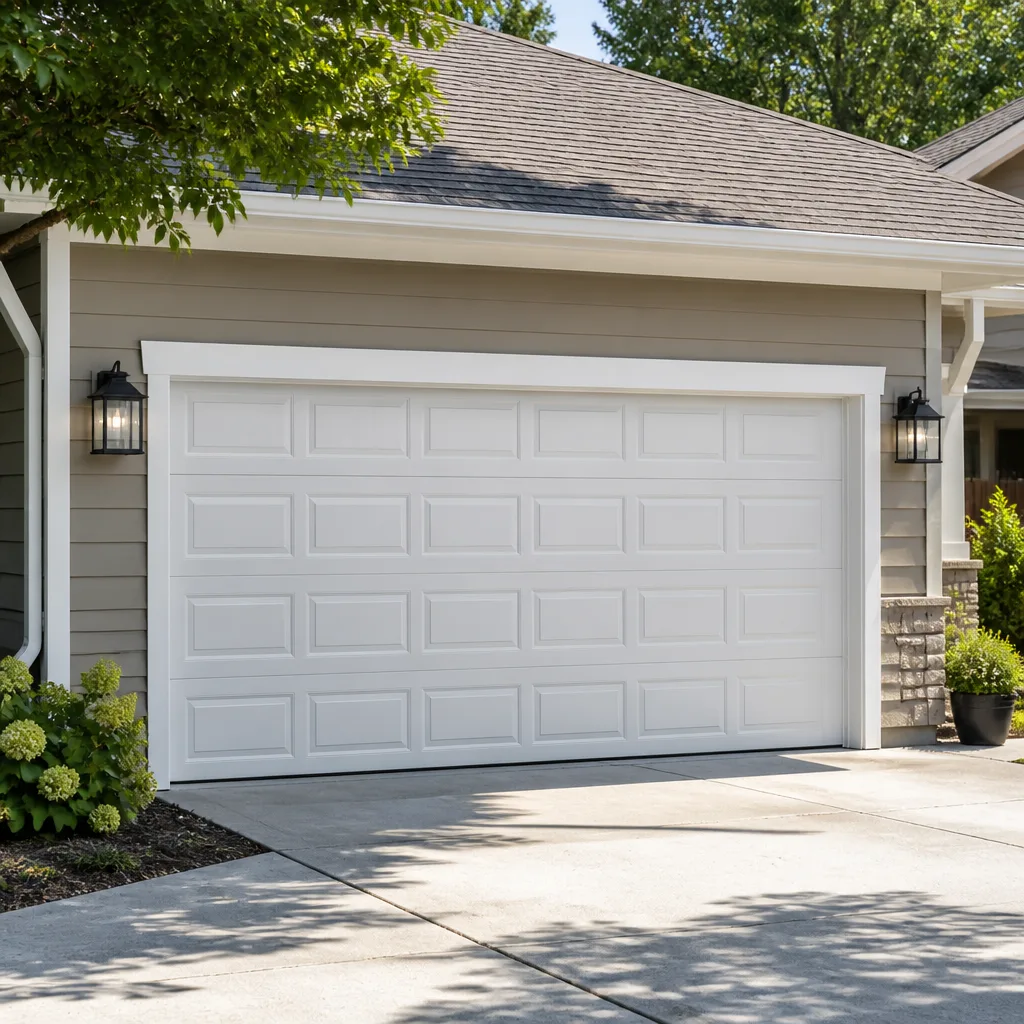 Raised-panel steel
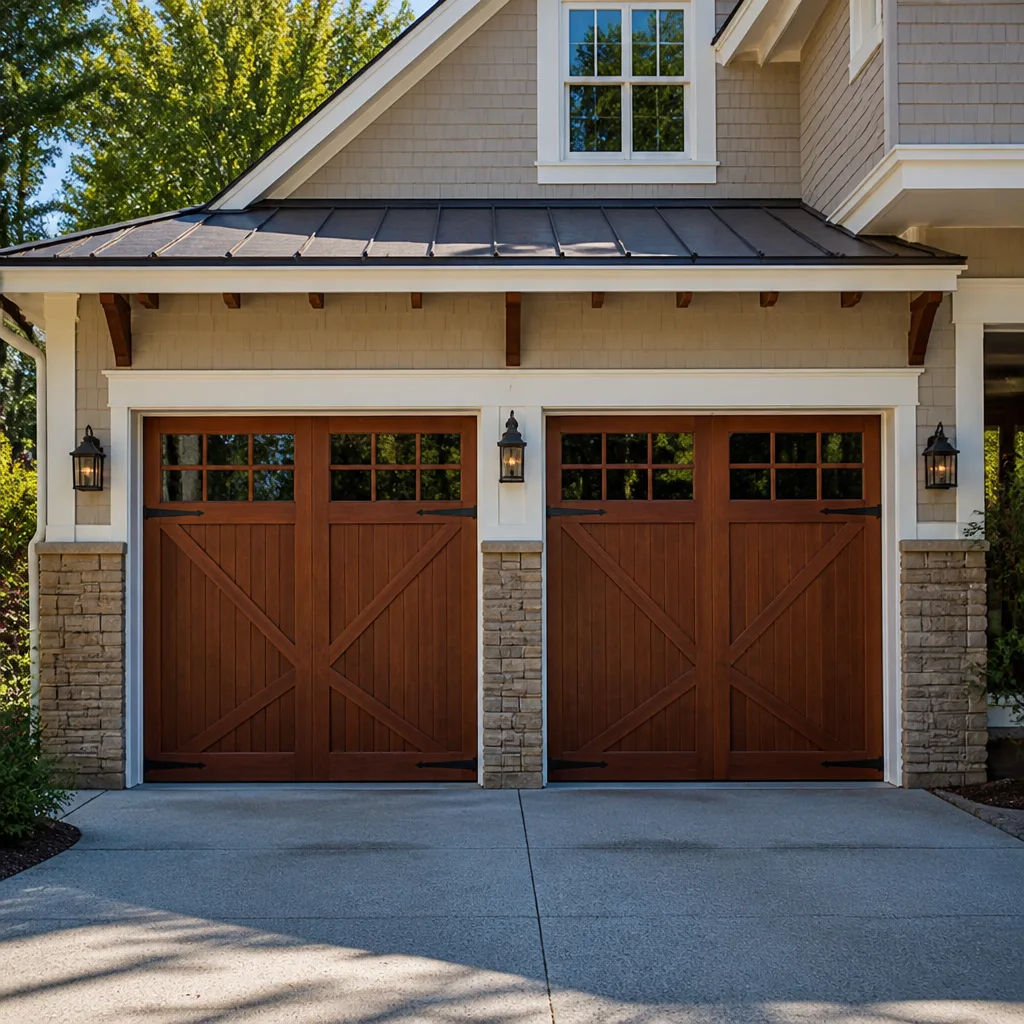 Carriage house
 Modern flush
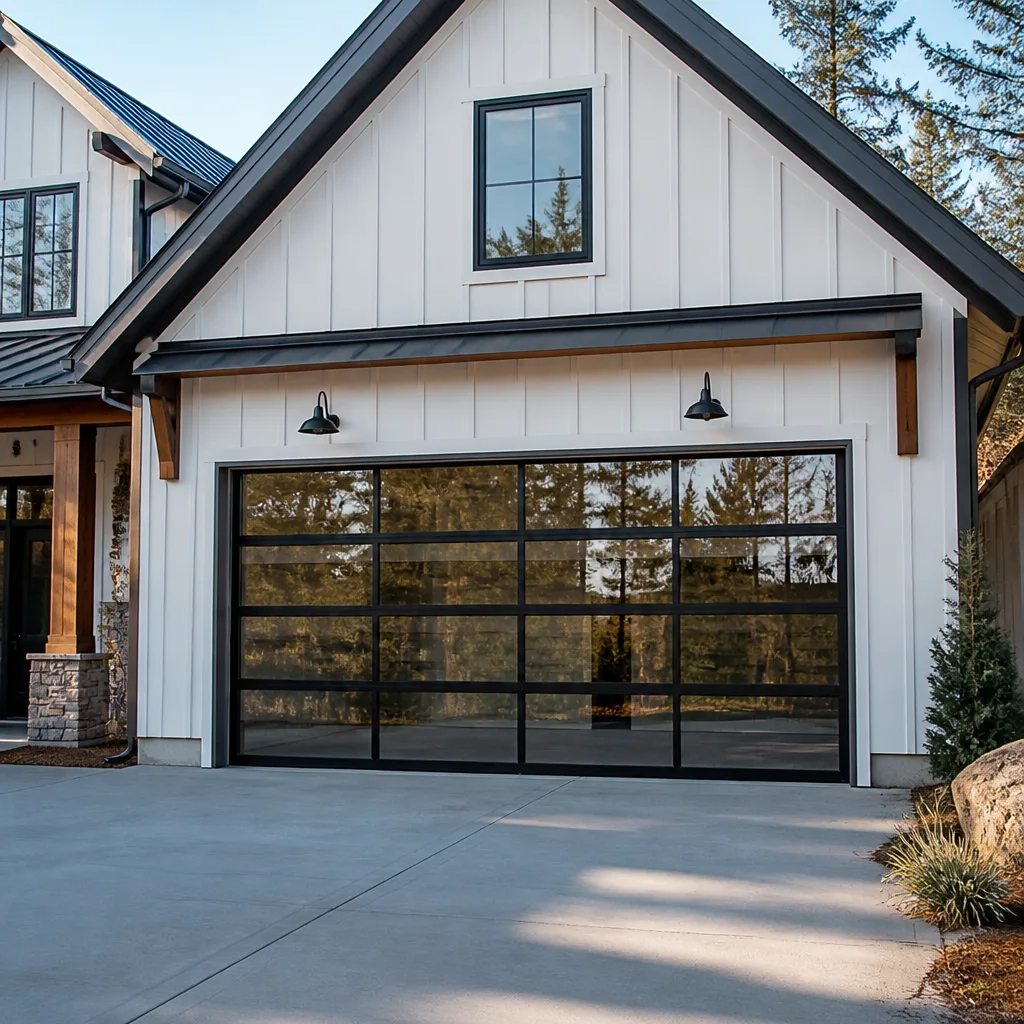 Full-view glass
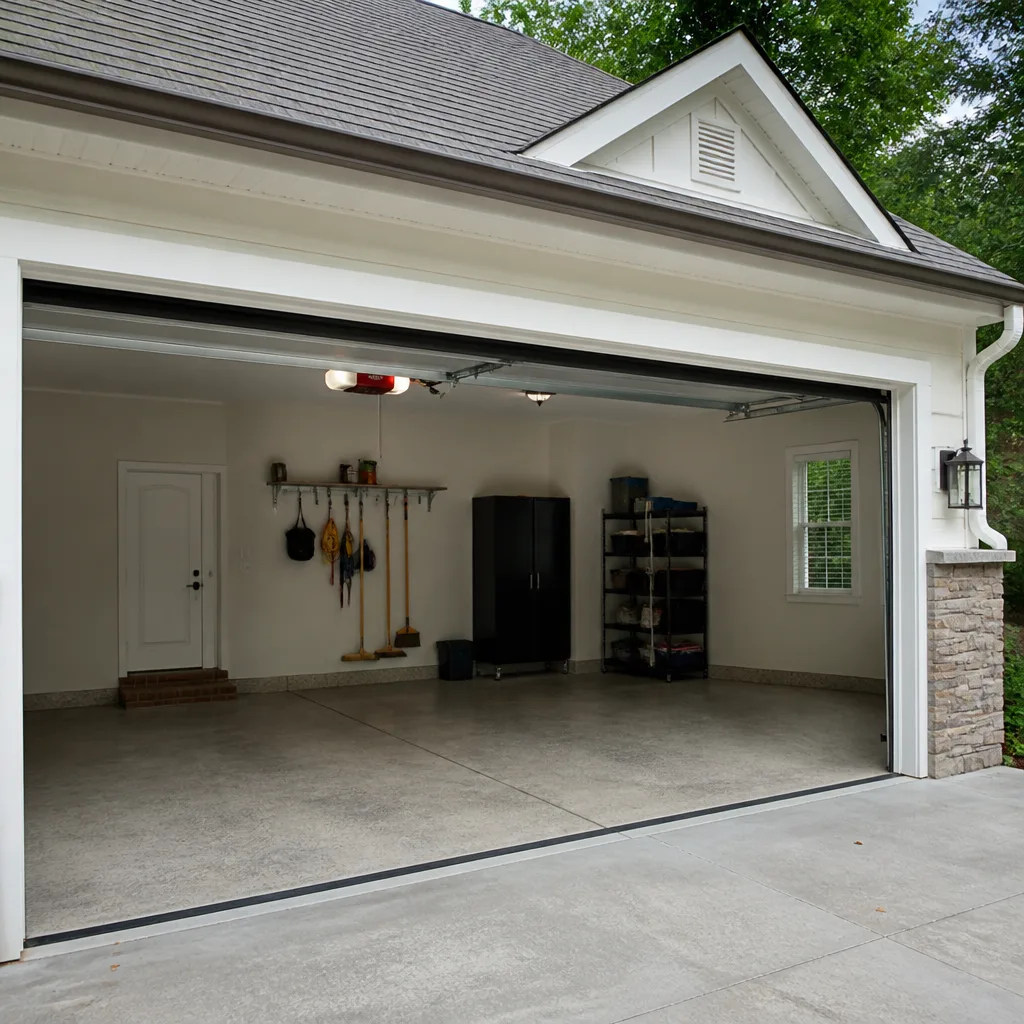 LiftMaster openers
 Chamberlain openers
Full 25-point door and opener safety check with every visit - springs, cables, rollers, tracks, and your LiftMaster or Chamberlain opener included
You get a price before we start. It does not change when the pro arrives.
Get your free estimateGarage Door Emergency Preparedness Guide for Kempsville Homes
Most garage door emergencies aren’t really about the door. They’re about the moment you realize you don’t know how the thing works. During a power outage, most homeowners don’t know where their manual release cord is, how to use it correctly, or that pulling the wrong way on a door with a broken spring can cause the door to drop without warning. That’s information you need before the lights go out, not while you’re holding a flashlight in your teeth. Kempsville gets its share of summer storms and hurricane-season outages, and a door that won’t move turns a mild inconvenience into a blocked car, an unsecured house, or worse. This guide covers what to do, what not to do, and what to have ready before you’re in a crisis.
Quick Answer
If your garage door is stuck and you can’t get your car out, the first move is to identify why before you touch anything: check whether the opener has power, whether the wall control is locked, and whether the door is visibly crooked or hanging on a slack cable. If the door is crooked, a cable is visibly hanging, or you hear a loud bang followed by a door that won’t lift, stop and call a technician, because forcing it can drop the door or cause a serious injury. For a simple power outage with an otherwise healthy door, use the manual release cord correctly and lift the door by hand. Garage Door Repair Kempsville handles emergency service as a named offering, and you can reach us at (844) 697-8393 for a free estimate.
Styles & brands we work with
- Raised-panel steel
- Carriage house
- Modern flush
- Full-view glass
- LiftMaster openers
- Chamberlain openers
Table of Contents
- Why Garage Door Emergencies Are a Kempsville Problem
- How Do You Use a Manual Release Cord Safely?
- Door Stuck Shut at Night: What to Do and What Not to Do
- Hurricane Prep for Kempsville: What Your Door Can Handle
- How to Tell If a Storm-Damaged Door Is Safe to Operate
- The Garage Door Emergency Kit and Information to Have Ready
- Why Springs Are the Most Dangerous Part of Any Emergency
- What a Technician Needs When You Call After Hours
Why Garage Door Emergencies Are a Kempsville Problem
The garage is how most Kempsville households actually enter and leave their homes. It’s the door that cycles several times a day, every day, holding a load of hundreds of pounds on a pair of springs and a set of cables. That constant use is what eventually wears components out, and when a spring snaps or a cable lets go, it usually does so without warning. Add in the power outages that come with hurricane season, and you have a piece of equipment that needs a plan before it needs a repair.
Kempsville sits in a part of Virginia where summer thunderstorms and tropical systems can knock out power for hours. When the power goes, your opener is dead, and the only way to move the door is by hand. If nobody in the house knows how to release the door safely, the car stays inside. That’s the scenario this guide is built around.
There’s a second local reality: the housing stock in Kempsville spans several decades, which means the doors and openers here range from older Craftsman chain-drive units to newer LiftMaster belt-drive systems. Each style has its own manual release and its own quirks. Preparation looks different depending on what’s on your ceiling.
What you’ll learn in this guide:
- How to operate a manual release the right way for the most common opener types.
- What to do when a door is stuck shut at night with a car inside.
- How to tell whether a storm-damaged door is safe to touch.
- What to keep ready so a crisis doesn’t turn into a panic.
How Do You Use a Manual Release Cord Safely?
The manual release cord disconnects the door from the opener so you can lift it by hand during a power failure. On most residential openers it’s a red or brightly colored handle hanging from the trolley that rides along the rail. Pulling it releases the door from the motor. The trick is knowing what to check first, because pulling that cord on a door with a broken or weak spring can let the door come down hard and fast.
Before you pull the release, check these things:
- Look at the door. Is it level? Are any panels bent, or is the door visibly crooked in the tracks? If so, don’t release it. A crooked door means something structural is wrong.
- Look at the springs. On a standard torsion setup, the springs are wound on the bar above the door. If you see a visible gap in a coil, the spring is broken. On extension springs along the sides, look for a stretched or dangling spring. Either way, leave the door alone.
- Look at the cables. Are both cables taut and seated in their drums? A slack, dangling, or off-track cable means the door isn’t balanced and could fall.
- Feel the door. With the door closed, do a light push up. If it feels unusually heavy, the spring system isn’t doing its job.
If everything looks normal, here’s how to release and lift a door safely:
- Stand clear of the door’s path and make sure nobody is under it.
- Reach up and pull the release handle straight down toward the door. This disconnects the trolley.
- Lift the door slowly by hand using the bottom section, keeping your fingers away from the panel joints.
- Lift it all the way open, then prop it securely or make sure it stays up on its own before you let go. A manual door that won’t stay up is a door with a spring problem.
- Once open, secure the door so it doesn’t drift down. Don’t leave it half-open unattended.
When the power comes back, pull the release again or run the opener to re-engage the trolley, and test the door through a full cycle before you trust it. If it doesn’t reconnect cleanly, that’s a job for a technician. If you’re not sure about your model, our garage door opener repair team works with LiftMaster, Chamberlain, Genie, and other common brands and can walk you through it.
Door Stuck Shut at Night: What to Do and What Not to Do
When a door is stuck shut at night and your car is inside, the temptation is to force it. Don’t. Most overnight failures come down to a broken spring, a snapped cable, or a door that’s come off its track, and forcing a door in any of those states can drop it, bend the panels beyond repair, or injure whoever is standing under it. A garage door is one of the heaviest moving parts in your house, and it only moves easily because the spring system is doing the lifting for you.
Here’s the calm sequence to work through:
- Check the simple stuff first. Is the opener plugged in? Has a breaker tripped? Is the wall control locked? Is the photo-eye or safety sensor blocked by something, or is the manual lock engaged? Sometimes the “emergency” is a dead outlet or an engaged lock.
- Do a visual inspection. Look for a broken spring, a slack cable, a bent track, or a crooked door. Any of those means stop.
- Test the manual release only if the door looks healthy. See the section above.
- If the door looks damaged, leave it shut. Don’t force it open, and don’t try to muscle it partway. Call for help.
What not to do, in plain terms:
- Don’t yank the release cord if you haven’t checked the springs and cables.
- Don’t force the door upward with a pry bar or by shoving the bottom panel. You’ll bend it, and a bent door won’t seal.
- Don’t stand under the door while you’re diagnosing it.
- Don’t try to adjust, cut, or unwind a spring yourself. That’s the one part of this system that’s genuinely dangerous to touch.
When it can’t wait, call for emergency service. Garage Door Repair Kempsville handles garage door repair including spring and cable failures, with fast dispatch from 7am to 7pm. A price is quoted and agreed before any work starts, so you know the number before anyone touches the door.
Hurricane Prep for Kempsville: What Your Door Can Handle
A standard residential garage door is not a wind-rated door, and that matters during hurricane season in Kempsville. Most single-car and double-car doors you find in the neighborhood are built for normal daily use, not for the sustained wind and pressure changes of a tropical system. Knowing the difference between a standard door and a wind-rated one is the first step in preparing.
What “wind-rated” actually means:
- Tested to a specific pressure. A wind-rated door has been tested to hold against a stated design pressure, usually expressed in pounds per square foot. That rating is tied to the door, its reinforcement, and its hardware as a system.
- It’s not just the door. A wind rating depends on the track, the hinges, the reinforcement struts, and how the door is anchored to the framing. Swapping a panel onto an unreinforced frame doesn’t get you the rating.
- It affects insurance. Some insurers offer credits for a verified wind-rated door, but the requirements vary by carrier and by policy. If you’re counting on a credit, confirm the requirement with your insurer before you buy.
For a standard door that isn’t wind-rated, prep looks like this:
- Clear the door’s path. Make sure nothing is stored against the door or in the tracks.
- Check the balance. A door that’s heavy or doesn’t stay up on its own is a door that could be more vulnerable in a storm. Get it serviced before the season.
- Know your release. If the power goes during a storm, you may need to get the door open or closed by hand, and you don’t want to figure that out in the rain.
- Secure the house. If you’re leaving, close the door fully and verify the safety reverse still works before you go.
If you’re wondering whether it’s worth upgrading to a wind-rated door, our garage door installation team can measure the opening and quote a written price for a door that matches your home, whether that’s a Clopay, Amarr, or another major brand. Replacement work is measured and scheduled, so plan ahead rather than waiting for a storm to force the issue.
How to Tell If a Storm-Damaged Door Is Safe to Operate
After a storm, the question is whether your door is safe to open and close or whether it should stay shut until a technician inspects it. A door that looks fine can still hide a bent track, a stretched cable, or a spring that’s been overstressed. Operating it can turn a small problem into a big one.
Use this quick check, looking only, never touching moving parts:
- Is it square? Stand back and look at the gaps along the sides and top. If the door sits crooked or one side is higher, the track or alignment is off.
- Are the tracks straight? Look for dents, bends, or track sections that have pulled away from the wall.
- Are the cables intact? Both cables should be taut and seated. A dangling cable is a stop sign.
- Are the panels damaged? Cracked or bowed panels can bind in the tracks and pull the door off course.
- Any debris in the tracks? Storm debris in the track can jam the door and bend it on the first cycle.
If everything looks square, straight, and intact, run one slow test cycle and watch the door. Listen for grinding, popping, or a door that speeds up or slows down unevenly. Any of those sounds means stop and get it inspected.
If it looks damaged, leave the door closed. Don’t force it. A storm-damaged door can fail suddenly, and a technician needs to see it in the position it failed. Our Garage Door Repair Kempsville team handles emergency calls after storms and can assess the door safely. Give us a call at (844) 697-8393 for a free estimate.
The Garage Door Emergency Kit and Information to Have Ready
The best time to gather what you need is before an emergency. A little preparation now saves a lot of searching later. Here’s what to keep on hand and where to find it.
What to store:
- Your opener model number. Find it on the back or bottom of the motor unit, or on the inside of the light cover. Write it down and keep it in a folder. If you have a LiftMaster or Chamberlain, the model and serial are usually on a sticker on the housing.
- Your door brand. Look for a sticker on the inside of the door. Craftsman, Raynor, Clopay, and other brands all have their own parts, and knowing yours speeds up the repair.
- Manual release instructions. Print a short set of steps and tape it inside the garage, near the release cord. Don’t rely on memory during an outage.
- A flashlight and a step stool. Keep them near the garage so you can find the release cord in the dark.
- Your technician’s number. Save (844) 697-8393 in your phone now, not when you need it. A technician needs to know the brand, model, and a description of what happened, and having the info ready makes the call faster.
What to know in your head:
- Where the release cord hangs and how to reach it safely.
- What a healthy spring and cable look like.
- Which way to walk out if the door fails.
- When to stop and call instead of trying to fix it.
Why Springs Are the Most Dangerous Part of Any Emergency
Garage door springs are the most dangerous component in the system, and that’s true whether the door is mid-emergency or working fine. A torsion spring is wound under high tension to counterbalance a door that can weigh hundreds of pounds. When one breaks, it releases that energy in an instant, and the door can fall. That’s why spring repair is a standalone service at Garage Door Repair Kempsville and why we handle it in-house rather than sending it out.
What you should know about springs:
- They fail without warning. A loud bang from the garage is often a spring breaking, not a burglar.
- They come in matched pairs. When one torsion spring breaks, the other is usually replaced with it. A single spring repair is one spring; a pair costs about twice that.
- They aren’t a DIY job. We won’t walk you through winding one. The tooling and training required for safe spring work are the reason this repair belongs with a professional.
- They’re normal wear. Springs are rated in cycles, and every open and close counts. Frequent use means earlier replacement.
If you hear that bang and the door won’t lift, leave it closed and call for service. Same-day service is available for spring and emergency failures. A price is quoted before work begins, so there’s no surprise invoice after.
What a Technician Needs When You Call After Hours
An after-hours call goes faster when you have the right information ready. A technician needs to know what system you have and what happened, so the right parts and tools come with them. Here’s what to have in hand before you dial.
- The door and opener brand. Tell us if it’s a LiftMaster, Chamberlain, Genie, Clopay, Amarr, Wayne Dalton, Craftsman, or Raynor. We service all eight and arrive familiar with the hardware.
- The model number if you can find it. It’s on the motor housing or the door sticker.
- A plain description of what happened. “Heard a bang, door won’t lift” tells us more than “it’s broken.” “Door is crooked and a cable is hanging” tells us to bring cable and track parts.
- Whether the door is open, closed, or stuck partway. This helps us plan the safety approach.
- Whether your car is trapped inside. If it is, say so. It changes the priority.
- Your address and gate code if you have one. Small thing, saves time.
If the door is stuck partway and hanging, don’t try to force it. Keep everyone clear and call us at (844) 697-8393. Emergency service is a real, listed offering with fast dispatch from 7am to 7pm, and the written estimate sets the price before any work starts. If you reach us after hours, we’ll book the next available slot, including early mornings or Sundays.
Common Mistakes to Avoid
- Pulling the release cord without checking the springs. The cord is meant to disconnect a healthy door. On a door with a broken spring or slack cable, releasing it can drop the door.
- Forcing a crooked door. A door that’s off its track or hanging on one cable will bend further if you force it, and a bent door won’t seal or close safely.
- Standing under a damaged door. A door that’s failed once can fail again. Keep clear until a technician has looked at it.
- Assuming a power outage means a broken door. Check the breaker, the outlet, and the wall lock before you assume the worst. A tripped breaker in Kempsville after a storm is common.
- Letting storm debris sit in the tracks. Debris left in the track can jam the door on the first cycle after the storm and bend the panels.
- Waiting for a small problem to become an emergency. A door that’s getting louder, slower, or harder to lift is telling you something. Get it looked at before it fails at night.
- Relying on memory during an outage. Nobody remembers where the release cord is in the dark. Tape the instructions where you can find them.
See the difference
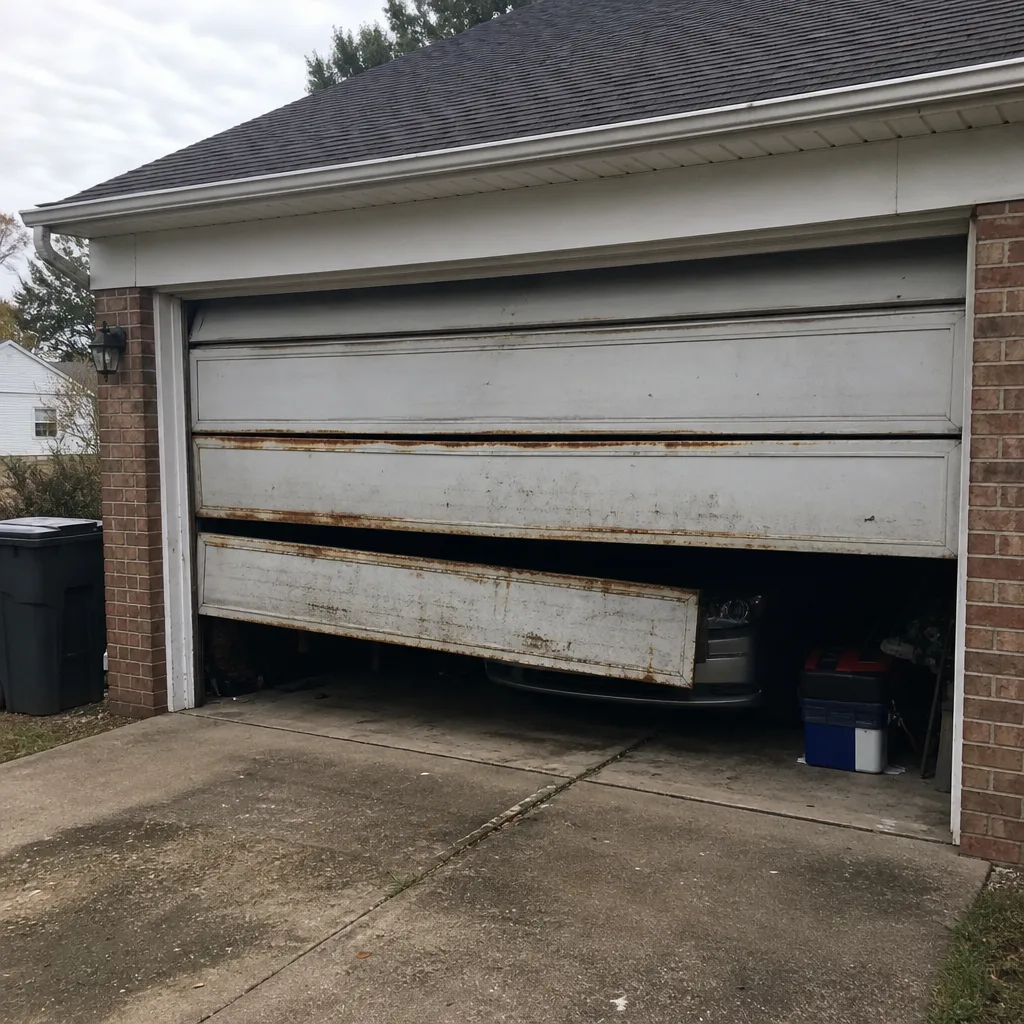 Before
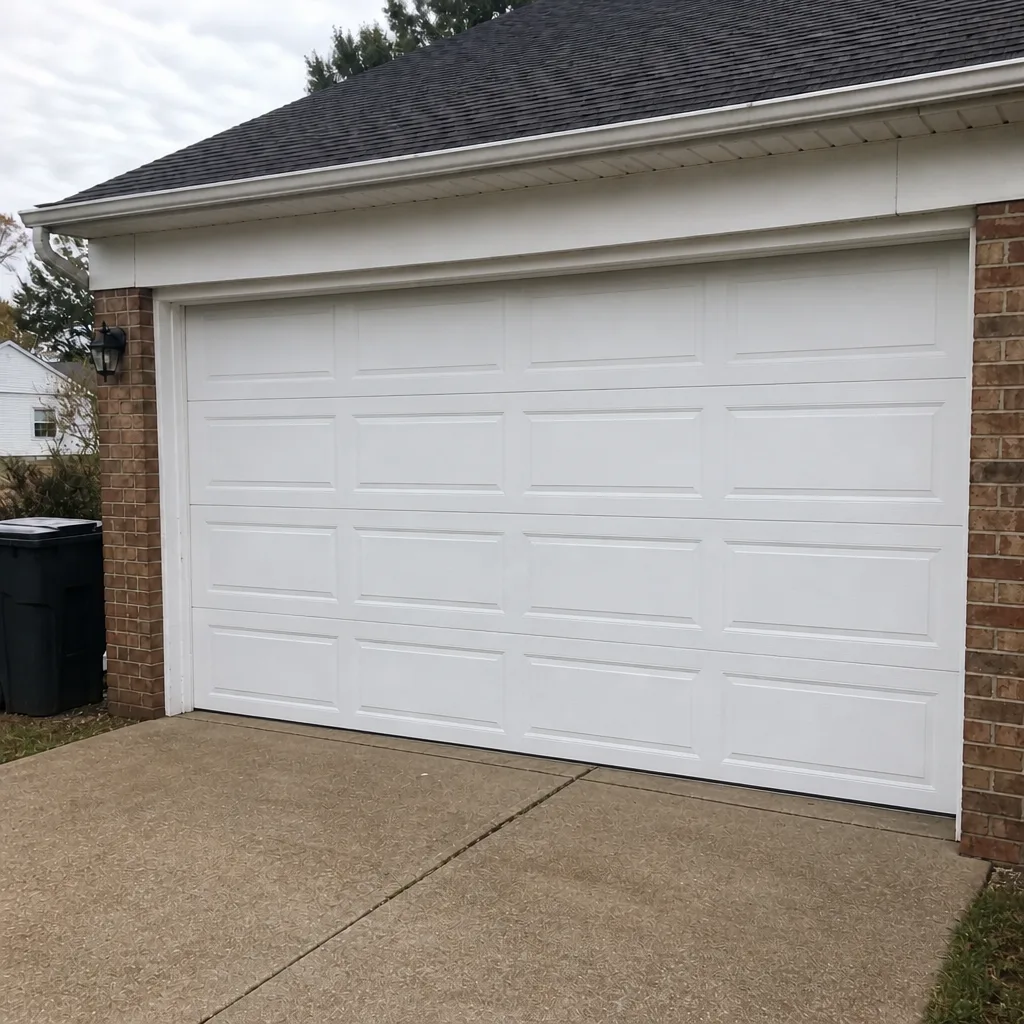 After
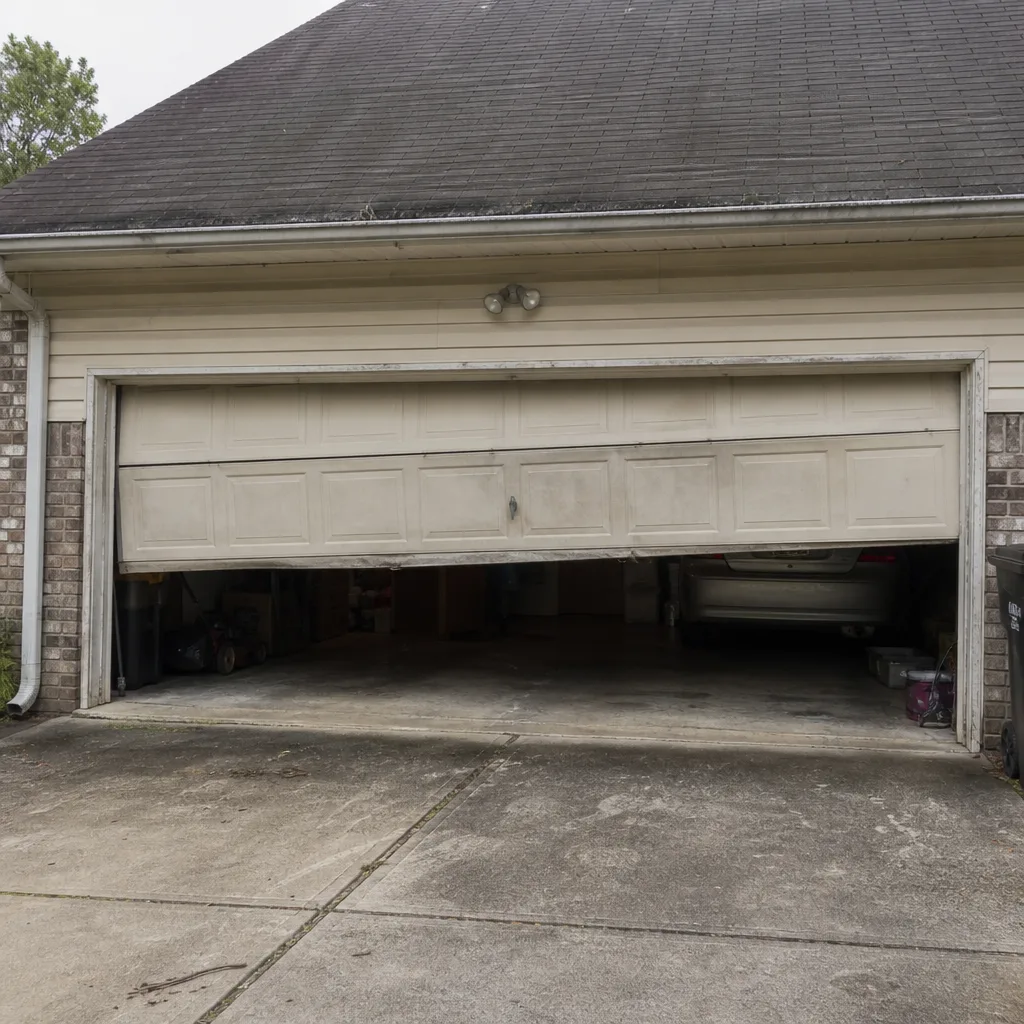 Before
 After
 Before
 After
When to Call a Professional
Some garage door problems are genuinely urgent and shouldn’t wait. Call a professional if you hear a loud bang and the door won’t lift, if a cable is slack or dangling, if the door is crooked or off its track, if a spring is visibly broken, if the door comes down on its own, or if a storm has damaged the door and you’re not sure it’s safe to operate. Also call if your car is trapped and the door won’t release safely, or if the opener runs but the door doesn’t move. Garage Door Repair Kempsville offers free estimates in Kempsville and handles emergency service as a listed offering, with same-day service for urgent failures and fast dispatch from 7am to 7pm. The price is quoted and agreed before any work starts, so there’s no surprise at the end. Call (844) 697-8393.
Frequently Asked Questions
Pull the manual release cord, but only after you’ve checked that the door is level, the springs are intact, and the cables are taut. Then lift the door by hand and prop it open securely. If the door looks crooked or a spring is broken, don’t release it; call a technician instead.
Yes. Emergency service is a listed offering, and we handle stuck doors, broken springs, and cable failures. Call (844) 697-8393 with your door and opener brand and a description of what happened, and we’ll book the soonest available slot, including early mornings or Sundays if that’s what works.
A standard door isn’t wind-rated, so it’s built for daily use rather than tropical-system wind and pressure. A wind-rated door is tested to a stated design pressure and depends on the full system, including tracks and reinforcement. If you’re planning for hurricane season, have your door inspected and ask about wind-rated options before the season starts.
Spring repair is priced per spring, and a matched pair is usually replaced together, so a pair costs about twice a single spring. The written estimate sets the final price before any work begins. Call (844) 697-8393 for an exact quote, which is free.
No. The price is quoted and agreed before any work starts, so the written estimate is what you pay. If the technician finds something that changes the scope, you’ll hear about it before any additional work begins.
We service eight major brands, including LiftMaster, Chamberlain, Genie, Clopay, Amarr, Wayne Dalton, Craftsman, and Raynor. Our technicians have up to 8 years of experience and arrive familiar with the hardware already on your home. If you’re not sure what you have, we can identify it on the call.
The Bottom Line
The most important thing you can do for a garage door emergency is prepare for it before it happens. Know where your release cord is. Know what a broken spring and a slack cable look like. Keep your opener model and door brand written down, and tape the manual release steps where you can find them in the dark. Check the simple things first when the door won’t move, and don’t force a door that’s crooked, hanging, or damaged. Storm season in Kempsville means power outages, and a little prep keeps a blocked car from becoming a real problem. When it can’t wait, one call covers the whole door. Reach us at (844) 697-8393 for a free estimate.
Written by the team at Garage Door Repair Kempsville.